Cart
0
You may also like


Dark lips get blamed on smoking almost by default — but if you've never smoked a day in your life and your lips are still darkening, that assumption isn't just wrong, it's the reason most advice doesn't work for you. Lip pigmentation is the darkening of the lips caused by excess melanin, and for Indian men specifically, sun exposure and daily shaving friction are just as common a cause as smoking — something most lip care guides never mention. We looked at the real causes, what's actually reversible, and which ingredients have clinical evidence behind them.
In This Article
Quick Answer: Lip pigmentation is the darkening or discoloration of the lips caused by excess melanin production. The most common causes are sun exposure, smoking, chronic lip licking, product irritation, hormonal changes, nutritional deficiencies, and — specifically for men — friction from daily shaving. Pigmentation from lifestyle and environmental causes is largely reversible with consistent care; genetic pigmentation is not, though appearance can still improve.
By the numbers: 12,100 monthly searches for "lip pigmentation" in India alone. Niacinamide showed a significant decrease in hyperpigmentation after just 4 weeks of use in clinical trials. Most lifestyle-driven cases respond within 4–6 weeks of consistent care.
Lip pigmentation is the darkening or uneven discoloration of the lips, caused by an overproduction of melanin — the same pigment responsible for skin tone. Unlike facial skin, lips have very little natural melanin protection and a much thinner outer layer, which makes them more sensitive to the same triggers that cause pigmentation elsewhere on the skin: UV exposure, inflammation, friction, and irritation.
It's an extremely common concern — not a rare skin condition — and for most men, it's driven by a combination of daily habits rather than a single cause.

UV light stimulates melanin production as the skin's defence mechanism. Because lips have almost no natural protection, they darken faster than facial skin from the same sun exposure — and it's the cause most men never think to protect against.

Nicotine and tar reduce blood flow to the lips and trigger melanin deposits from repeated heat and lip-pursing. Real, but only one of several causes — treating it as the automatic explanation is why non-smokers often can't find an answer.

Repeated licking irritates and dries the delicate skin, triggering post-inflammatory hyperpigmentation (PIH) — darkening that develops as skin heals from repeated micro-irritation, the same mechanism as a healing wound leaving a dark mark.

Daily shaving and stubble regrowth around the mouth causes repeated friction and micro-irritation in exactly the area most men don't associate with lip care. This is one of the most under-discussed causes for men specifically — most lip pigmentation content is written for women and skips it entirely.

Fragranced, flavoured, or harsh lip products can trigger allergic contact dermatitis. The resulting inflammation darkens the area as it heals, and people with sensitive skin are especially prone to this.

Hormonal shifts can trigger melasma-type pigmentation around the mouth and lips, similar to how it presents on facial skin.

Iron and Vitamin B12 deficiencies are occasionally linked to lip darkening. If pigmentation appears suddenly with no clear lifestyle cause, it's worth a basic blood check.
It depends entirely on the cause — and being honest about which one you're dealing with determines what's realistic to expect.
| Cause | Reversible? | What Helps |
|---|---|---|
| Sun exposure | Yes — with consistent care | Daily SPF lip balm, active ingredients like Niacinamide |
| Smoking | Yes — improves after quitting | Quitting smoking + SPF + active treatment |
| Lip licking / PIH | Yes — slower, needs habit change | Stop the habit, gentle hydration, avoid further irritation |
| Shaving friction | Yes — with routine adjustment | Gentler shaving technique, barrier balm post-shave, SPF |
| Product irritation | Yes — once trigger is removed | Switch to fragrance-free, gentle formulas |
| Genetic pigmentation | No — not fully reversible | Can still improve tone and texture with consistent care |
For most men, lip pigmentation is a mix of two or three of these causes stacked together — which is exactly why fixing only one (usually "quit smoking") often isn't enough on its own.

A double-blind clinical trial found niacinamide significantly decreased hyperpigmentation and increased skin lightness after just 4 weeks of use compared to a vehicle control. It works by inhibiting the transfer of melanin from pigment-producing cells to the surface skin.

A gentle exfoliating acid that reduces inflammation and helps fade hyperpigmentation. It's well suited to sensitive lip skin, which makes it a safer option than harsher acids for daily, long-term use.

Daily SPF is the single highest-leverage step here — every dermatology source on lip pigmentation agrees that continued, unprotected sun exposure undoes progress from any active ingredient. Non-negotiable, not optional.

Don't fade pigmentation directly, but support the skin barrier and repair — important because damaged, dry lip skin is more prone to the irritation that triggers further darkening.
A note on ingredients you'll see elsewhere: Kojic acid, alpha arbutin, and tretinoin are commonly recommended across lip care content, but we're not making efficacy claims on those here until we've verified the clinical evidence directly — worth flagging rather than repeating unsourced claims other sites make.
The most effective routine is simple, consistent, and takes under two minutes a day.
The most common mistake: treating this as a smoking problem when it's a sun-and-friction problem. Men who fix only the assumed cause often see no change — while consistent SPF alone frequently makes a visible difference within weeks.
Instead of one generic lip balm, White Wolf makes two versions — each built for a different cause covered above, so you can actually match the fix to what's darkening your lips rather than guessing.

Formulated specifically to repair smoking-damaged lips. Beetroot and Hemp help restore natural pinkish tone and boost circulation, with SPF protection and Vitamin E for daily repair.

Built for sun-driven and everyday pigmentation. Caffeine gently exfoliates and helps reduce pigmentation, Shea Butter and Vitamin E hydrate, and SPF guards against further tanning — the right pick if sun exposure or shaving friction is your main trigger.
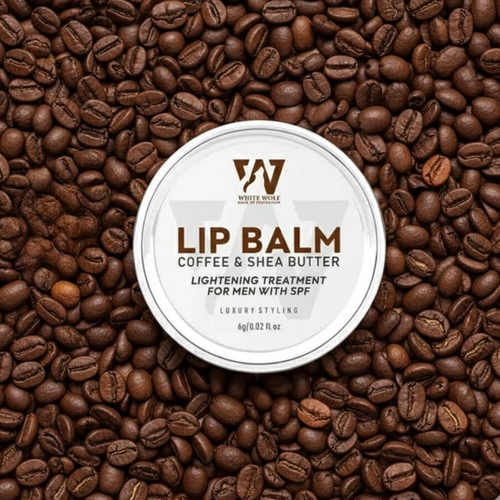
₹249 ₹299 — 6g, free delivery PAN India.
Shop White Wolf Lip Balm Now →
Vegan & Cruelty-Free · PETA Certified · Dermatologically Tested · Made for Indian Men · Free Delivery PAN India · As Seen In ABP News & PTI
ABP News · PTI · The Week · Jaipur Times · Rajasthan Headlines · Filmy Buddy
Instagram · YouTube · Facebook · Pinterest
Start by removing the trigger — daily SPF lip balm if it's sun-driven, quitting smoking if that's the cause, or switching products if it's an allergic reaction. Pair this with gentle weekly exfoliation and a hydrating, ingredient-backed lip treatment. Mild pigmentation typically improves within 4-6 weeks of consistent care; deeper or long-standing pigmentation can take longer and may need a dermatologist's input.
Yes, in most cases — pigmentation caused by sun exposure, smoking, product irritation, or lip licking responds well to consistent care and can visibly fade over weeks to months. Genetic lip pigmentation is different: it's part of your natural coloring and won't fully reverse, though ingredient-led care can still even out tone and improve appearance.
In the vast majority of cases, lip pigmentation is a cosmetic issue caused by sun exposure, smoking, friction, or product irritation, and isn't a health risk. It's worth seeing a doctor if the darkening appears suddenly without an obvious cause, is accompanied by pain or texture changes, or if you notice patches of lightening rather than darkening, since that can point to a different underlying condition.
Coconut oil can help hydrate and soften lips, which supports overall lip health, but it has no clinically proven skin-lightening effect on pigmentation itself. For actually fading pigmentation, ingredients with real clinical backing — like Niacinamide and Azelaic Acid — are a more reliable choice. Coconut oil works well as a night-time moisturiser alongside, not instead of, an active treatment.
Smoking is only one of several causes. For men specifically, daily shaving and facial hair friction around the mouth is a commonly overlooked trigger, alongside sun exposure, lip licking, product irritation, hormonal factors, and genetics. If you don't smoke, it's worth looking at your shaving routine and sun protection habits first.
Lip pigmentation is darkening caused by excess melanin — the focus of this guide. Depigmentation is the opposite: lighter or white patches from a loss of pigment, often linked to conditions like vitiligo. If you're seeing your lips lighten or develop pale patches rather than darken, that's a different issue and worth a dermatologist visit rather than a lip pigmentation treatment.
Mild pigmentation from sun exposure, smoking, or lip licking usually shows visible improvement within 4-6 weeks of consistent daily care — SPF protection, gentle exfoliation, and an active ingredient like Niacinamide. Deeper or long-standing pigmentation can take longer, and professional treatments are typically spaced 3-5 sessions, roughly 4 weeks apart, for stubborn cases.
Dark lips aren't just a smoking problem — for most Indian men, it's sun exposure, shaving friction, and everyday habits working together, and that's exactly why "just quit smoking" advice leaves so many people stuck with no results. The good news: aside from genetics, almost every cause here is addressable with a simple, consistent routine.
Protect daily with SPF, treat with a clinically-backed active like Niacinamide, and give it 4-6 weeks before judging results. No miracle overnight fixes — just a routine that actually works because it's built on the real cause, not the assumed one.


